AA Inoi Kerugoya #026 Kenya
AA Inoi Kerugoya #026 Kenya
Couldn't load pickup availability
Farmers deliver cherries to cooperative-run factories (washing stations) or collection centres, where initial sorting removes unripe or defective cherries. Each producer’s delivery is registered under their member ID, and they can choose to receive the minimum payment for the volume delivered or accumulate their balance throughout the harvest. Once the cooperative sells all the coffee for the season, the additional earnings, after operating costs are deducted,are distributed among members based on the total kilos each delivered.
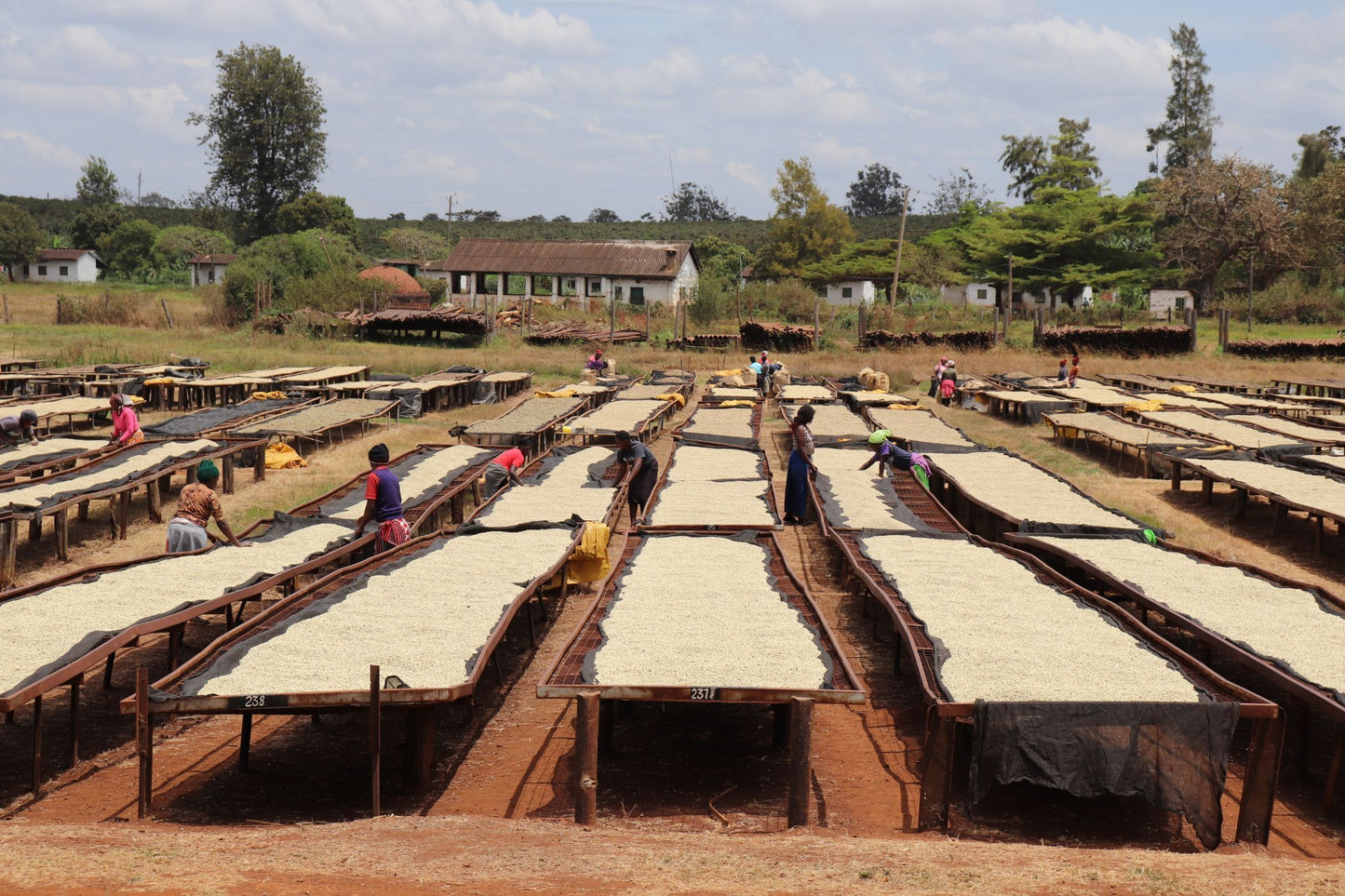
Pulping is typically done with disc pulpers, and parchment is separated by density before undergoing dry fermentation in concrete tanks. Intermediate washing and soaking help ensure consistency, followed by careful drying on traditional tables or raised beds, with shading and plastic covers used to protect against sun and rain. Moisture content is closely monitored, with a target of 11–12%. Some producers condition parchment at around 16% moisture before final drying to achieve even results.
About the producers
We work primarily with Farmer Cooperative Societies (FCS) that own and operate factories. These factories process cherries from hundreds of smallholders into daily lots, with profits shared among members. By law in Kenya, cooperatives can’t spend more than 20% of their earnings on operating costs, the rest must go back to the smallholder farmers. In practice, most of the cooperatives we work with keep this figure between 9–12%, which shows how efficiently they’re run.
Our focus is on smallholders in Central Kenya, including Kirinyaga, Embu, Muranga, and Kiambu, where we prioritise relationships with reliable suppliers to ensure consistent premiums. By cupping extensively at the mill, we’re able to select the best-performing coffees each year, keeping quality and flavour at the centre of what we do.
Share